
NATO Tensions Escalate as European Allies Resist US Pressure
POLITICS

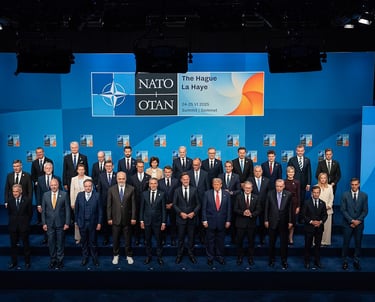
Deep divisions are fracturing the NATO alliance (once again) as European leaders openly resist intense pressure from the United States. Following the unprovoked military strikes launched by the US and Israel against Iran. Washington is actively demanding that its European allies deploy their naval fleets to the Middle East. The primary goal of this proposed deployment is to secure global oil routes that are currently facing severe threats from the escalating war. However, major European powers are refusing to participate in a conflict they did not authorize. They are firmly holding their ground against the heavy diplomatic pressure coming from Washington.
Several of the strongest military forces within NATO have publicly condemned the ongoing war. Leaders from France, Germany and Italy issued coordinated statements early March 1st criticizing the aggressive actions taken by the US and Israel. These allied nations argue that the initial attack on Iran was entirely unprovoked. Furthermore, they consider the sudden assassination of a foreign leader to be highly reckless. Diplomats in Brussels are expressing deep frustration that Washington deliberately bypassed traditional alliance consultations before sparking a massive regional war. European officials are making it abundantly clear that their respective militaries will not be dragged into a dangerous foreign entanglement simply to manage the aftermath of an American military operation.
The steadfast refusal of European allies to deploy their warships has triggered a furious response from President Donald Trump. During a highly confrontational press briefing, Trump heavily criticized the fundamental value of the NATO alliance. He boldly claimed that the historic military partnership is a complete waste of time if member nations refuse to support American strategic interests during a major crisis. Trump pointed out that European countries rely heavily on the petroleum flowing through the contested maritime routes. He insisted that they have a strict obligation to help defend those shipping lanes with their own military assets and financial resources. He even suggested that the United States might reconsider its future financial contributions to NATO if the European members do not immediately mobilize their fleets.
The global energy market is currently experiencing extreme volatility as the regional conflict intensifies. Commercial shipping companies are rapidly halting their operations near the Iranian coastline due to the severe risk of military crossfire. The United States Defense Department argues that a unified NATO naval presence is the absolute only way to deter further attacks on vulnerable commercial vessels. Military planners in Washington drafted a comprehensive maritime strategy that would specifically place European destroyers along the most critical transit corridors. Despite the undeniable economic threat to their own energy supplies, European parliamentary bodies are voting overwhelmingly to keep their armed forces stationed safely in their home ports.
Behind closed doors at the NATO headquarters in Brussels, the atmosphere is described by insiders as incredibly tense. The organization is fundamentally designed to act as a strict defensive alliance rather than an aggressive expeditionary force. High-ranking officials are privately reminding American representatives about the core articles of the founding treaty. Because the US and Israel initiated the unprovoked strike, the collective defense clause of the NATO agreement cannot be legally activated. The alliance is therefore actively choosing to resist the demands of the White House to maintain its own institutional integrity and avoid participating in an illegal war.
This unprecedented public split between the United States and its closest allies is fundamentally reshaping global diplomacy. Adversaries of the NATO alliance are closely monitoring the bitter internal disputes. Security analysts warn that these visible fractures within the coalition will inevitably embolden other hostile nations around the globe. Meanwhile, the violent conflict in the Middle East continues to escalate rapidly without any unified international strategy to contain the bloodshed. The continued resistance from Europe highlights a massive shift in global power dynamics. It clearly demonstrates that American military objectives no longer automatically dictate the foreign policy decisions of the broader Western world.
Synoptic News © 2026
Synoptic News empowers the idea of true, unbiased and even risky news.